 |
 |
 |
 |


|
|
|

|
Ultimate
Betrayal
|
 |
|
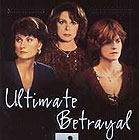
Surely one of the most disturbing markers of the current era is the exponential rise in reported cases of child abuse within families. It is as if a lid has suddenly been blown off the dirtiest secret hidden within our collective private-life. With this phenomenon comes a brigade of heartless commentators who mock the Repressed Memory Syndrome, casting those who come forward with their tragedy as wimps who long to be victims. The films, and especially telemovies, which tackle this topic from the '90s onward embody all the difficulties that arise when trying to deal with it publicly. There seems to be no simple, lucid or rational way to dramatise child abuse and its repressed memory. Precisely because it has been repressed for so long (by individuals, families and society as a whole), the topic sparks a veritable contagion of hysteria, ambiguity and paranoid recrimination. Ultimate Betrayal is a Canadian telemovie which sinks itself so deeply into the mire of its subject matter that it transcends judgment as a mere film. Rather it becomes a therapeutic ordeal, a ritual nightmare for the viewer. It is based on the shocking true story of a father who abused his six children over a period of twenty-five years – with the cruel, crowning irony that he was also an FBI agent who lectured widely on the psychopathology of child abuse. The script by Gregory Goodell (a veteran of sensationalist telemovies) examines the wreckage of the victims' adult lives. The women (played by Marlo Thomas, Ally Sheedy and Mel Harris) hit the rock-bottom of dysfunctionality before banding together to expose their monstrous father; the men, in perfect denial, defend their dear old Dad to the end. The film presents an unending torrent of painful memories. Wisely, it avoids tying everything up in a neat, cathartic resolution. Ultimate Betrayal makes for harrowing and salutary viewing. MORE repressed memory: The Bed You Sleep In © Adrian Martin November 1994 |


