 |
 |
 |
 |


|
|
|

|
Twin Sisters
|
 |
|
The
Dutch film Twin Sisters resembles a
compressed version of the kind of stately mini-series screened on quality TV.
It
uses a familiar story device for surveying the turbulent events of the last
century: two siblings are split up in childhood, each going on to experience
very different lifestyles. The rift between them stands for the pain of all
who, in real life, suffered similar traumas.
The
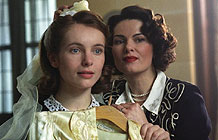
twin siblings in focus here are Lotte (Thekla Reuten) and Anna (Nadja Uhl).
While Anna remains as an oppressed worker in a Germany soon be overrun by
Nazism, the sickly Lotte experiences being taken away by relatives to enjoy a
pampered life in the Netherlands.
As
we pass back and forth between the twin trajectories of these sisters, we note
the paradoxes. Anna has to fight for the right to read books and study, while
Lotte becomes so bored with her classical education that she only wants to
flirt with a favourite boy.
The
sisters are kept apart by the soulless machinations of their respective
minders. But even when they do manage to reunite, much divides them: class,
manners, and dreaded ideology. Eventually, Anna marries a German man who is
inducted into the SS, while Lotte becomes attached to a Jew.
All
of this is rich material for a European melodrama saturated in politics and
history. But director Ben Sombogaart and writer Marieke van der Pol (adapting
Tessa de Loo’s novel) arrange this panorama in a clunky, plodding way.
When
the sisters are apart, the film devotes too much energy to finding clever ways
of cutting from one to the other – transitions constructed on a word, object,
gesture or piece of music. The effect quickly becomes tiresome and predictable.
When
the sisters are together, the film pulls back from really confronting its
material. As in so many historical epics of this type, the great events of the
century tend to happen indirectly or off-screen to other countries – leaving
our heroines to react weepily as they read telegrams or listen to the radio.
The
other major problem with Twin Sisters is its lacklustre framing story, showing an elderly Anna (Gundrun Okras)
pursuing Lotte (Ellen Vogel) into the woods for a long-avoided chat. The film
is so keen to engineer a reconciliation that it
virtually drops its exploration of politics altogether. As
Anna cries: “If we two cannot talk to each other now, who in this world can?”
© Adrian Martin June 2004 |


