 |
 |
 |
 |


|
|
|

|
Trigger Happy
|
 |
|
Trigger Happy begins engagingly as a comic
abstraction of the great gangster movies of another era.
As stars
twinkle in the sky, an introductory narration tells of the mighty criminal
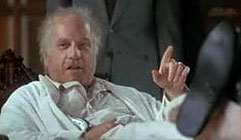
empire of Vic (Richard Dreyfuss). Then the camera reveals an opulent but empty
mansion in an eerily deserted street: Vic's world, but obviously well past its
glory days, now unfolding in a barren setting reminiscent of the Absurdist
plays of the ‘60s.
Writer-director
Larry Bishop (who also appears in a small role) takes the structure of the
classic gangster narrative – the power plays, tense stand-offs, psychological
games, violent clinches – and reduces it to a brittle skeleton. And on that
framework he hangs a particular kind of humour – a boyish smug, ironic
clowning-around.
This is
essentially a one-joke comedy – and its joke wears mighty thin mighty fast. It
has the feel of a ten-minute short stretched to nine times its natural length.
The empty, stylised sets soon grow irritatingly familiar, and much of the
supposedly riotous dialogue plays at the level of inane word games ("Vic
is a sick prick, Mick").
One thing Trigger Happy certainly has in spades is
star power. Dreyfuss, Gabriel Byrne, Jeff Goldblum and Ellen Barkin have
evident fun sparking off each other within the style set by Bishop. Only Burt
Reynolds – doing an even more grotesque turn than the one he offered in Striptease (1996) – jars the ensemble.
Ultimately,
this is one of those nudge-wink movies that sets out to relentlessly flatter
those spectators in the know or on the vibe. And on that level, at least, it is
a modest success. With its cool, shambling references to the Brat Pack,
© Adrian Martin April 1997 |


