|
 |
 |
 |


|
|
|

|
Night Nurse
|
 |
|
This
is a film that invites – invites me, at least – to engage in the
‘+’ game of influences and homages. You know how the game goes,
especially in the opportunistic world of movie promotion: x film = y
film + z film. So: an initial scene of elderly citizens being led
around a pool by hired carers evokes Robert Altman’s immortal 3
Women (1977). Power games – or skin games, as Raymond
Durgnat called them, complete with sudden reversals – recall Joseph
Losey’s 1963 classic The Servant (as does the fact that fact that both films largely happen indoors).
A prickly enjoyment in the amorality and perversity of what plays out
between carer and cared-for reminds one of the BDSM comedy hit Secretary (2002). And
‘deframed’ shots like this one prompt memories of Vincent Gallo’s
directorial efforts, particularly Buffalo
66 (1998).
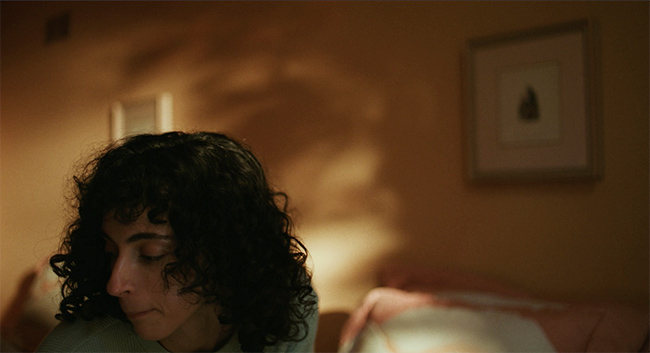
Writer-director-co-producer Georgia Bernstein and lead actor Cemre Paksoy (they first collaborated in 2017 on Snugglr) add, in their interviews, a bunch of other reference points: Catherine Breillat (think Abuse of Weakness, 2013), John Cassavetes, and (given the title, it’s natural) “Roger Corman’s 1970’s nursesploitation trilogy”. Put all that together, and it’s quite an equation. But not a messy palimpsest: quite early on, Night Nurse achieves a peculiar, affecting, coherent tone and pretty much sustains it all the way through. (The ‘teaser’ – in every sense – intro under the opening credits is better in retrospect, once you’ve seen the whole thing, than on initial, protracted viewing experience.) The Gallo (not giallo) ambience, whether or not it was on Bernstein’s mind, strikes home in the way that Night Nurse very swiftly precipitates us into a strange, warped tunnel-vision of actions, gestures and atmospheres. There’s no indulgence, here, of the typical tendency to start with quotidian normality (Mimi Rogers’ role is the closest we get to that!) and gradually edge our way into odd, immoral behaviours and arrangements. From the word go, effectively, we are plunged inside the intriguing relationship of wily old Douglas (Bruce McKenzie) with his closest carer, Mona (Eleonore Hendricks), and the longing, potentially unhinged, desiring gazes of a new nurse, Eleni (Paksoy). Bernstein speaks of mercilessly taking out (with editor Alex Jacobs) any detail that was ‘too real’ in the assembled footage – such as too many contemporary cars in the street backgrounds. The film strikes a timeless, placeless note (although we are actually in the American Midwest), fluctuating between the 1950s and now. The music score (by Steven Jackson & Sam Clapp) – predominantly flute and piano, sometimes a slightly bigger light-jazz combo – is maddeningly (and deliberately) off at a treacly tangent to the plot, like some misremembered, misregistered soundtrack of a Catholic TV drama of the 1970s (I saw many of those during the Sunday mornings of my teenagehood!). The voices regularly exude a post-sync manner of unnerving, in-your-ear intimacy (I suggest listening to the film through headphones). It takes a while to figure out the logistics of the essential narrative situation: the differential gradation (through which the characters move) of “retirement homes, assisted living, and nursing homes”. But the ruthless focus on the off-kilter, on constant nagging disorientation, on ellipse and enigma, is all to the project’s credit. The central storyline hinges on Douglas’ pretence – but does there come a point when he’s no longer pretending? – of creeping dementia, and his amazing ability to inveigle a large troop of nurses (three, in particular) into collaborating with his ingenious money-scamming … of other residents in this affluent but addled retirement community! You can wonder whether this thriller hook is entirely realistic in its mechanics – and why, exactly, Douglas would commit his final, decisive act – but the film largely succeeds in erasing the relevance of such questioning thoughts. One aspect that is deeply impressive: the point is made that Douglas is, in the strictly phallic sense, impotent (nobody can hitch a ride on his pogo stick, as he disarmingly states to Eleni) – and it’s precisely this removal of the character from the sphere of penetration or rape that, somewhat paradoxically, secures his remarkable seductiveness. Don’t let the title fool you: it’s neither a Corman sex-romp comedy nor the gory escalating-action horror-hospital piece that Brea Grant delivered in her excellent 12 Hour Shift (2020). Far more in the 3 Women vein, but with a more tightly screwed-up tension, Night Nurse probes what Paksoy has described as the intersection of “sensuality and pain”, of conscious deliberation and unconscious fantasy. Night Nurse uses not conventional physical sex but many varieties of human touching to work its way into this undeniably fascinating theme. The actors are brave to take on the task so committedly and wholeheartedly; the film’s bold stylistic choices keep pace with these performances every step of the way. It’s a formidable debut feature from Bernstein. © Adrian Martin 16 August 2026 |