|
 |
 |
 |


|
|
|

|
Use No Hooks: Pialat/Farber |
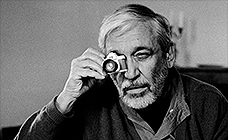 Maurice Pialat |
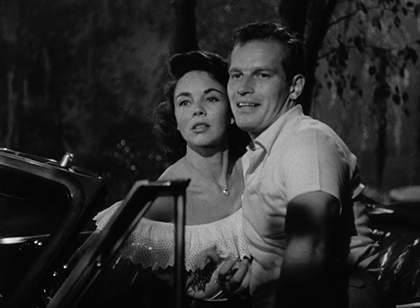
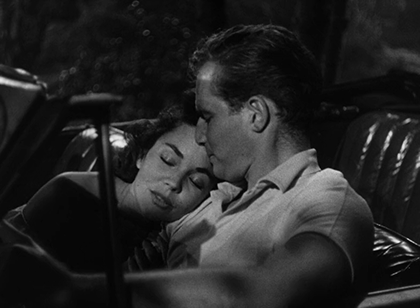
In the audio commentary over an episode on DVD of the American TV series Mad Men (Season 1, 2007), the very crafty ex-critic Tim Hunter informs us that direction, in the conventionally professional sense, is mostly a matter of working out how people are going to detach themselves from a clinch or a group, in order to move in and out of a room or a shot – with all the problems of logistics, fluidity, plausibility, ease, pacing and timing this seemingly banal bit of business poses when you actually block it with a cast in front of a crew. Because, as it turns out (and everyone who has ever tried to direct anything for the screen or stage knows this), the simplest movements can look awkward, inelegant, ridiculous or boring. Great classical filmmakers like Ernst Lubitsch and King Vidor had a way of fixing this problem: they choreographed their unfolding scenes in such a way that the two or more actors more-or-less freeze, periodically, into quite static, fixed arrangements, during which important dialogue is delivered; and then, in-between these arrangements, sometimes as the camera deftly reframes the shot, there are swift movements of bodies in and out of the frame. A
scene from Vidor’s Ruby Gentry (1952) provides a handy
example: here, the director solves for himself the problem of how to
elegantly film a long dialogue delivered in a parked car. The
performers (Jennifer Jones and Charlton Heston) freeze, speak, and
then rearrange themselves – with the camera performing a swift
dolly-in that reframes them centre-screen each time.
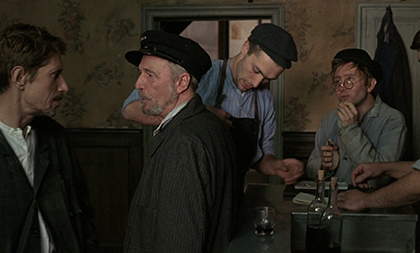
So, according to Hunter, you need to figure out such base-line stuff, in rehearsals and on the set, before you get to any of the lofty, expressive levels of creativity that most critics and scholars generally assume as constituting the act of filmmaking. Basic questions such as: how will your actor get up from a table? How will he or she move around that table to get to the door? How much will this movement reveal or conceal the other players in the scene? How much or how little of this action can be shown, in and out of the frame, and in the ultimate découpage of a scene? And what will this motion do to the initially set, pictorial composition of the frame, and to the camera’s perspective on the scene? David Bordwell is among the few specialist commentators to focus on such questions for their own sake, as part and parcel of film craft within the classical tradition – not merely as a quick, obligatory, preliminary stepping-stone to the analysis of film art. (1) But there is more to cinema than classicism. For there is an army of directors who deliberately do not make it easy for their actors to move around – inside a set, or inside the frame of a shot. The lieutenants of this army include Rainer Werner Fassbinder, John Cassavetes, Pier Paolo Pasolini, Elaine May, Carmelo Bene, Larry Clark and – my main subject here – Maurice Pialat (1925-2003). In
the works of these directors, the space in which the actors are given
to perform is cramped and strewn with obstacles. The performers
cannot easily turn to look at and address one another. They are lined
up along axes and oriented in directions that confound contact. Each
setting is a kind of labyrinth. And, in particular, they cannot make a move across or in or out of the shot without stepping
across the position or path or another actor, often in an ungainly,
awkward or even impossible manner. And this is, as yet, saying
nothing about the framing strategies that are likely to decentre any
actor almost completely out of the shot – blotted out by another
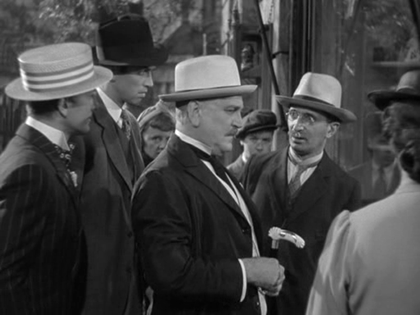
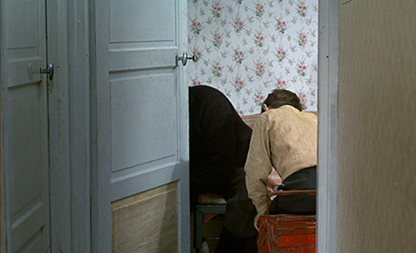
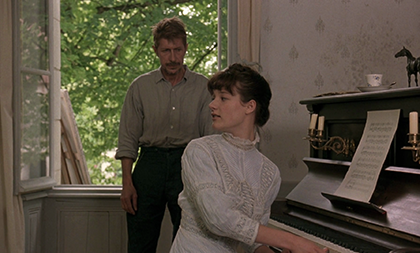
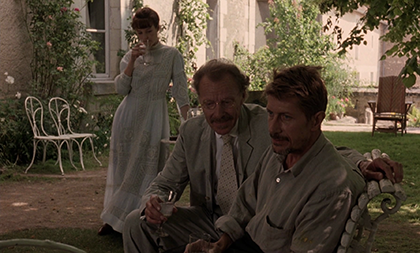
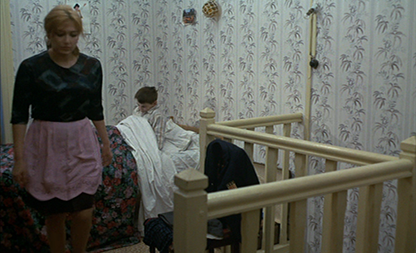
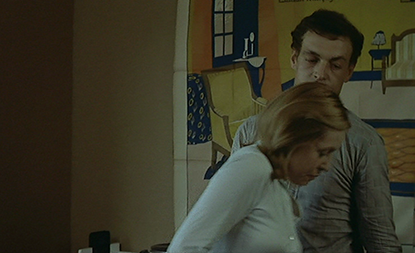
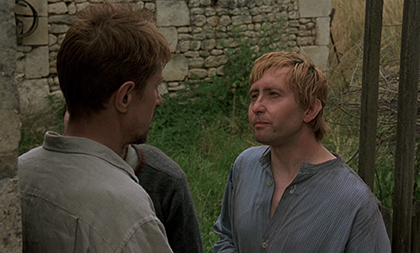
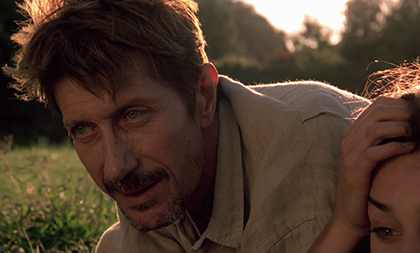
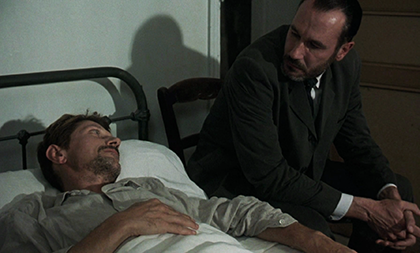
body, or left with just one eye still in frame. Here is a small gallery of representative images from Pialat’s
narrative features made between 1968 and 1991 (there was only one
subsequent film before his death: Le
Garçu in 1995).
Bene (1937-2002), in his stage, film and TV productions alike, erected an entire barrage of obstructions for his actors to deal with, putting the performers at war with the words they simultaneously spoke, and the simplest trajectories across the set or stage that the text ordered them to perform: some mannequin had to be taken apart and put back together again while a soliloquy was delivered; and there would be a maze-like array of props that offered no straight line to anywhere. Jean-Luc Godard did something similar in the 1960s, when he decreed that his actors should be able to fry an egg, read the newspaper and deliver a scripted monologue all at the same time, as the camera rolled in a single, merciless take. You can see on screen that, for instance in Pierrot le fou (1965), Jean-Paul Belmondo could do exactly this rather well. So, in this special group of mischief-making filmmakers, the canny detonation of a certain definition of movie craft – the heavy molasses of a mise en scène when the normally fluid, elegant motions stop happening, or never get to be arrived at or formed in the first place – becomes the new terrain where cinema is shaped, each awkward, painful micro-gesture at a time. The American critic and painter Manny Farber (1917-2008) was alert to this aspect of Fassbinder when he wrote, in collaboration with his partner, Patricia Patterson: “The essence of Fassbinder is a nagging physical discomfort”. (2) A full comparison of the respective works and aesthetics of Farber and Maurice Pialat – who, very crucially, were both painters – must wait for another occasion; here, I want specifically to offer an approach to Pialat through the lens of his soul brother, Farber, and some others that Farber influenced or directly collaborated with in writing and/or teaching, such as Patterson and the filmmaker Jean-Pierre Gorin, his veritable protégé in San Diego. Soul
brothers? Pialat was almost certainly unaware of Farber’s existence
over there in America; but, near the end of his life, Farber came to
regard Pialat’s Van Gogh (1991),
which he watched many times over, as one of the greatest films, and
certainly the greatest film about a
painter and his art. Although Farber had finished writing about
cinema by the late 1970s in order to devote himself more fully to
painting, one of his final public appearances, in 2004, was an
introduction and discussion of this film.
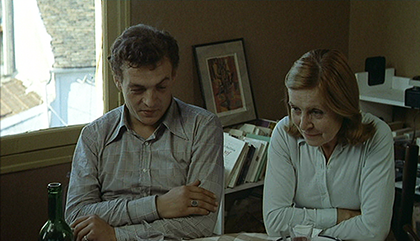
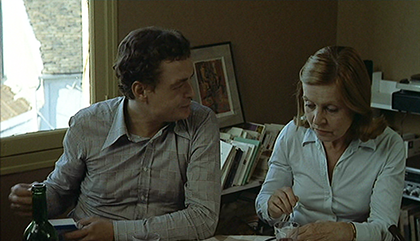
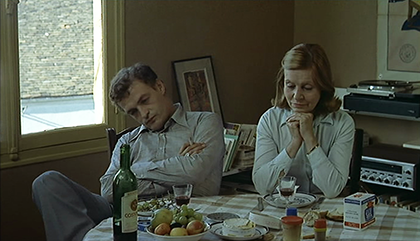
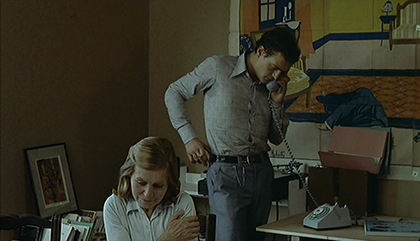
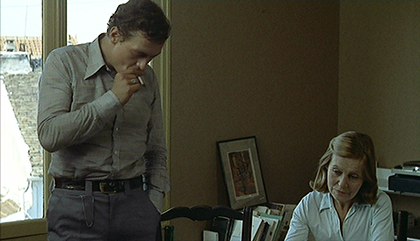
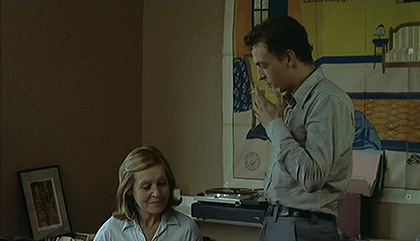
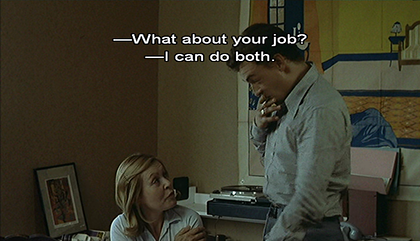
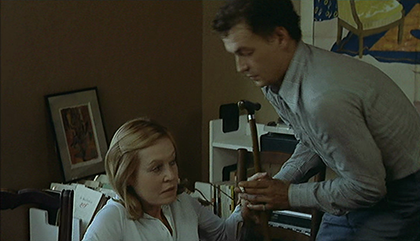
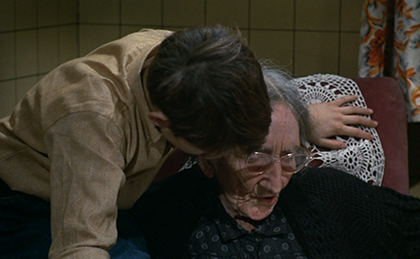
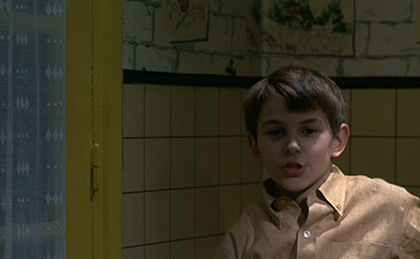
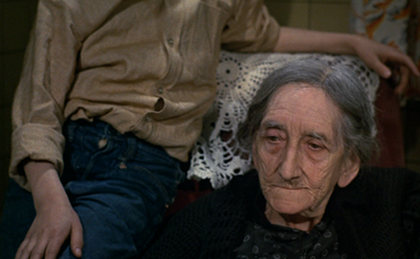
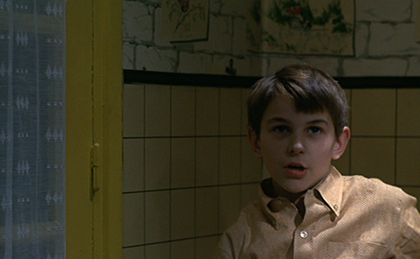
As viewers, we should all be made to suffer (often) through this scene, just as the characters suffer through it – and, especially, as the actors were made to suffer through it, in the space of the room and in the unfolding time of its duration. I offer here a short, selective account of the scene. Pialat
stages an everyday yet difficult interaction between a mother (who
will be soon felled by a degenerative disease) and her adult son. It
possesses intimacy and distance, familiarity and awkwardness. We know
a great deal from many sources (such as Pascal Mérigeau’s
biography) about the often harsh and demanding ways that Pialat
worked on his actors to get the dramatic textures and effects he
wanted. (4) Elements of
improvisation and psychodrama, plus multiple, ever-varied takes as in
Stanley Kubrick’s work, were used to play on the element of
surprise. At times, Pialat would
exploit precisely the lack of real
affection between the assembled players forced together into scenes:
one or both actors might have unforeseen questions to pose to their
co-performer during an interaction, questions sometimes uneasily, weirdly poised on a fuzzy border between fiction and reality. In this
case, the character names already cue us into the fuzziness: Philippe
and Monique, the actors’ own first names.
Let’s
pay attention to the staging here. Mise en
scène, at least
in its classical mode, never seems an especially appropriate term to
describe what Pialat does in scenes like this. (5) He does not direct in the time-honoured and tradition-honoured
Max Ophüls or Vincente
Minnelli sense of laying out lines and paths,
choreographing the movement of bodies, adjusting and modulating the
frame as the action proceeds. Direction is something else for him:
Gorin, once again channelling the lessons of Farber, calls it manoeuvring. (6) Manoeuvring actors into place, sometimes a bad place, and
forcing them, like Bene, to try to wriggle their way out of there as
best they can – with the relentless long take camera recording
their successes and failures in this campaign alike. Manoeuvring also
involves those dialogue strategies I have already mentioned: setting
the actors at cross-purposes, having them struggle, in real time,
with their words and their replies, their actions and reactions.
Manoeuvring, in the sense that I am seizing on this notion, begins at the idea and scripting stages of filmmaking, long before the cameras roll. Manoeuvring is a way of thinking about the kinds of actions and situations that are going to constitute the life and texture of a film. In Pialat, these are always painful and bitter situations, involving the memory or the consequence of betrayals, abandonments and blocked desires: that is the tissue of family melodrama that constitutes this particular film, La gueule ouverte. (8) Let
us now look at the frame – and to
that slightly shaky, nervously mobile, reframing camera-eye in the
sequence-shot at hand. Also to the balance of light, the tricky use
of intense natural light through the window, a sign of celebrated
cinematographer Néstor
Almendros’ work with Pialat on this film. The effort with framing and lighting does not add up to an equivalent of action painting, or any familiar form of screen dynamism. The scene
has much more to with waiting, with temps
morts, an eternally awkward pause as the two characters
sort-of listen to a record that Philippe decides to put on half-way
through the scene as a distraction from the enforced intimacy of the
dinner-table positioning. The framing itself gets awkward as the
scene proceeds in these fits and starts, with the camera trying to
cope with the resultant trauma.
What
is the event, the action, the fiction here?
Where does it turn, how does it reach any kind of conclusion? Scenes
do not just peter out in Pialat, as they do in so much ‘slow
cinema’ of today, draining away with the winds and the tides. His
cinema is always very eventful, even brutal. At first, it seems that
the scene will engineer or manoeuvre its concluding turn through a
sudden phone call that Philippe leaps up to answer. But once that is
done, the shock comes from elsewhere: from Monique’s sudden
weakness as she tries to stand, her quick collapse and just as quick
recovery: a catastrophe of just a few frames, hard to catch even in
a screenshot. That provides the seed, the nucleus, for the full,
painful decline of body and mind that is to follow in the movie.
It is easy to forget or overlook the fact that Pialat, like Cassavetes, was an extremely rigorous editor. Sure, Pialat, like Cassavetes, like Terrence Malick, Stanley Kubrick or Ken Loach, shot a great deal of a material: dozens of takes, and many variations on each scene. But that does not mean he (or any of the other directors just listed) is lazy or sloppy. Pialat’s editing collaborator Yann Dedet speaks of how he and the director would take apart and reassemble scenes in montage many times over, making one character and then another the possible centre of the scene. (10) How great it would be if, in our age of digital editing, we could consult all these successive drafts of a Pialat scene! The mind boggles as to the types of radical experimentation this process must have entailed. The trace of that radicality is richly evident in Pialat’s cutting: both within and between scenes, indeterminate ellipses, as well as spatial shifts and disorientations, rule. According to his sometime cinematographer Willy Kurant, Pialat angrily, dismissively regarded almost everything to do with shot or scene continuity as merely “anecdotal” (i.e., serving a purely narrative function), and hence irrelevant to his process. (11) Consider
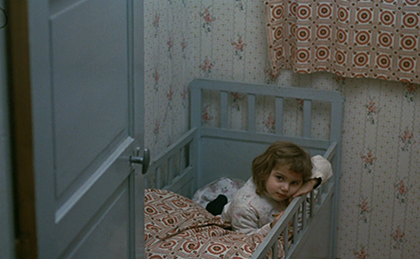
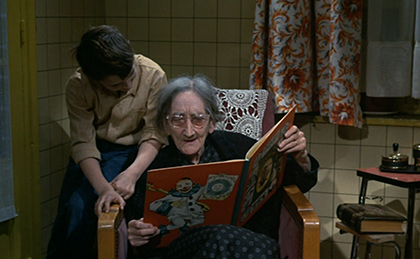
a sequence of consecutive set-ups from L’Enfance-nue (sometimes referred to as Naked
Childhood, 1968). After an exchange between the elderly, kindly
foster-parents who feature prominently in the film, we have an
enigmatic shot of a little girl (referred to as a daughter) who is
scarcely placed in the rest of the story, beyond two or three
fleeting sightings: she is just there,
forming an enigmatic transition or bridge between sequences, and
between rooms in the house (where, we come to understand, many
orphaned kids dwell, now and again).
The post-punk motto was the perfect negation of this: use no hooks, do not make it easy on the audience, make them work for what you’re giving them. Just as Cassavetes used to say: people should pay a thousand dollars for the privilege of seeing one of his films; why should he make it easy for us to consume it? Now, Pialat and Farber were, each in their own, indelible ways, a couple of punks. Difficult, grouchy characters – ornery, as the Americans say. They translated their grouchiness into their art. That
is not to say there was not also intense, in fact bottomless moments
of intimacy, tenderness and affection in their respective works.
Remember, Pialat titled one of his harshest films about family life To Our Loves (À
nos amours, 1983); and he was, in his own, intransigent
way, some kind of Romantic. (12) In Van Gogh, it takes over 150
minutes of hard, niggling, sibling exchanges between Vincent and Theo
to arrive at a simple, silent moment of a shared look, shortly before
the artist’s death.
Pialat uses no hook: he just manoeuvres us here, to this frame, this look and this moment, over a long, slow, unstressed unfolding. This could serve as one definition, or elaboration, of what Farber famously called termite art, the art of details – as opposed to white elephant art, which is always heavily underlined and signalled in its effects for the spectator. In Farber, a customary terseness in his critical prose also led us, if we are ready and willing, to similar pay-offs. The words are always very carefully chosen – at least as carefully as Pialat’s framings. Like when he and Patterson said of Fassbinder, after enumerating a little taxonomy of the director’s favourite stylistic moves, that in his films “the shopkeepers of life [are] treated without condescension or impatience”. (13) Of course, the same goes for Pialat’s films. Not just literal shopkeepers, mind you, but the shopkeepers of life, shopkeepers of every kind – and the implied rebuke that what we, and what films, usually bring to them is not only snobbishness and snap judgement but, above all, impatience: a veritable aesthetic of impatience, of whittling something down into an easily manageable sign or cliché and breezing past it as swiftly as possible within the course of a film. As I suggested earlier, the opposite of cliché (and of hooks) is not unvarnished reality: rather, it is a texture, a rhythm, an art. In Robert Bresson’s Mouchette (1967), which Farber also saw as (like a Pialat film) a portrait of “excruciating physical discomfort” (14), he praised “some of the most important things movies can do” – thus producing a wayward, anti-programmatic list that includes a minor character who is “barely caught […] backed into through gesture and spirit, rather than direct portrayal”; (15) and “the simple effect of a form” – in this context, he means a human figure – “briefly lit by a truck’s headlights”. (16) Always a question of depicting, of manoeuvring and working: the Pialat/Farber question to cinema.
2. Manny Farber, Negative Space: Manny Farber on the Movies (New York: Da Capo, 1998), p. 313. Note that most of the material in this book was reprinted, alongside much else, in Robert Polito (ed.), Farber on Film: The Complete Film Writings of Manny Farber (New York: The Library of America, 2009). back 3. Jean-Pierre Gorin, “L’Enfance-nue”, Film Comment, Vol. 40 No. 3 (May-June 2004), p. 36. back 4. Pascal Mérigeau, Maurice Pialat l’imprécateur (Paris: Grasset, 2003). back 5. For a wide range of practices falling under this banner, see my book Mise en scène and Film Style: From Classical Narrative to New Media Art (London: Palgrave, 2014); and also a summary of it on this website. back 6. See Gorin, “L’Enfance-nue”. back 7. John Berger, Berger on Drawing (London: Occasional Press, 2007); Michael Taussig, I Swear I Saw This: Drawings in Fieldwork Notebooks, Namely My Own (Chicago: The University of Chicago Press, 2011). back 8. My previous essays on Pialat (from 2009 & 2010) will be collected in a forthcoming book, Certain Dark Corners of Modern Cinema (Sticking Place, 2028). back 9. Kent Jones, “L’Enfance-nue”, in L’amour existe/L’Enfance-nue DVD booklet (Masters of Cinema, 2008), pp. 7-15. back 10. See Alain Philippon, À nos amours, de Maurice Pialat (Crisnée: Yellow Now, 1996), pp. 109-115. back 11. Willy Kurant, 2004 interview no longer online. back 12. For an exploration of this film and other scenes mentioned in the present essay, see the 2019 audiovisual essay on Pialat made by Cristina Álvarez López and myself for Sight and Sound (warning: the title is not ours). back 13. Farber, Negative Space, p. 301. back 14. Ibid., p. 231. back 15. Ibid., p. 232. back 16. Ibid., p. 231. back
© Adrian Martin July 2014 |