|
 |
 |
 |


|
|
|

|
Mia Hansen-Løve: |
 |
The
first ellipsis marks the displacement of its hero, political
journalist Gabriel (Roman Kolinka, a Hansen-Løve
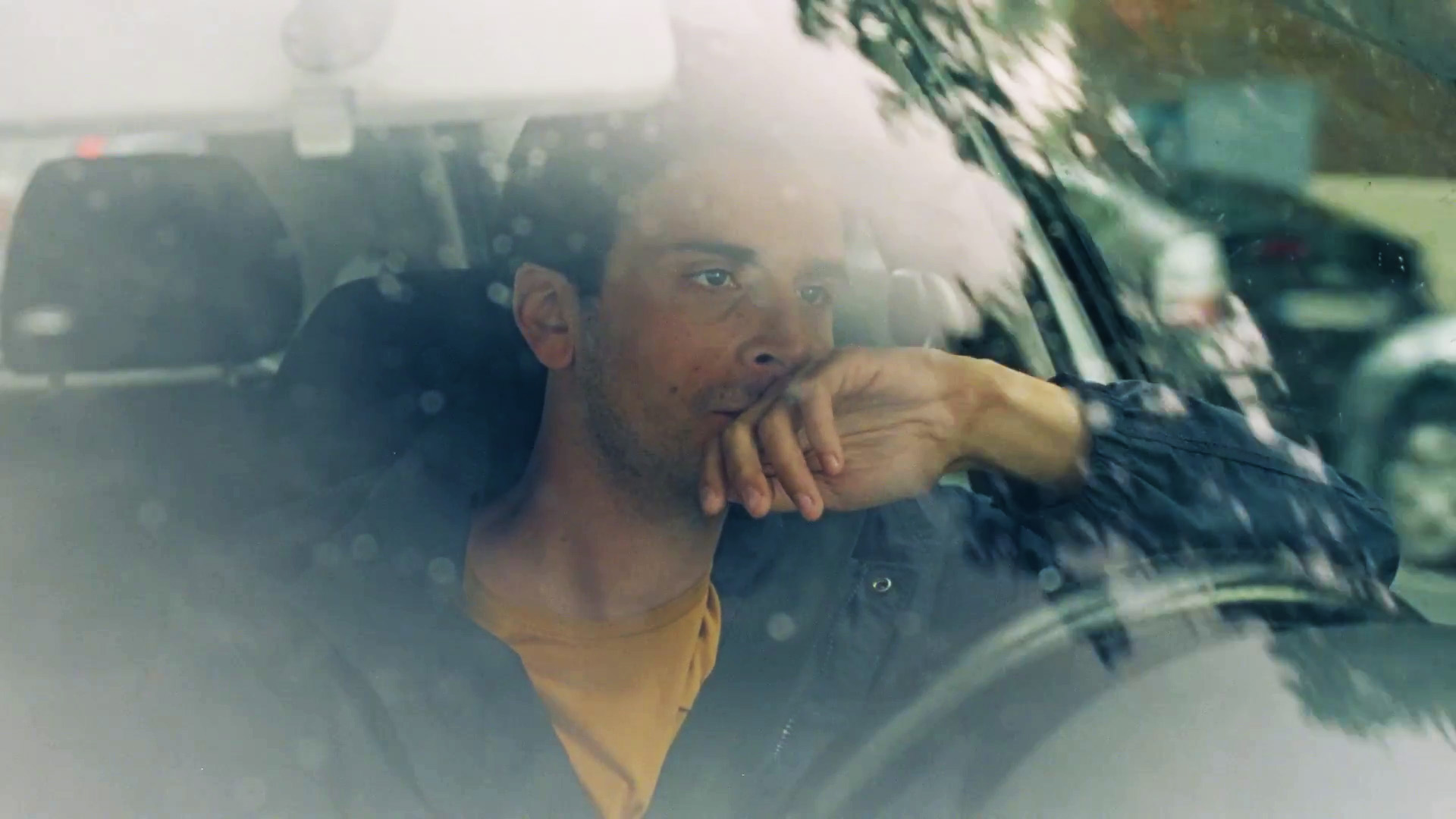
regular), from Paris (France) to Goa (India). In the first shot, he
is driving a car; in the second, we see a mobile view out a car
window – with subsequent coverage revealing Gabriel as a passenger
in the back seat. A seemingly continuous action thereby briefly
disorients the viewer: in this cut, Gabriel’s entire process of
travelling abroad has been skipped out. The film has ‘driven
forward’ boldly.
The
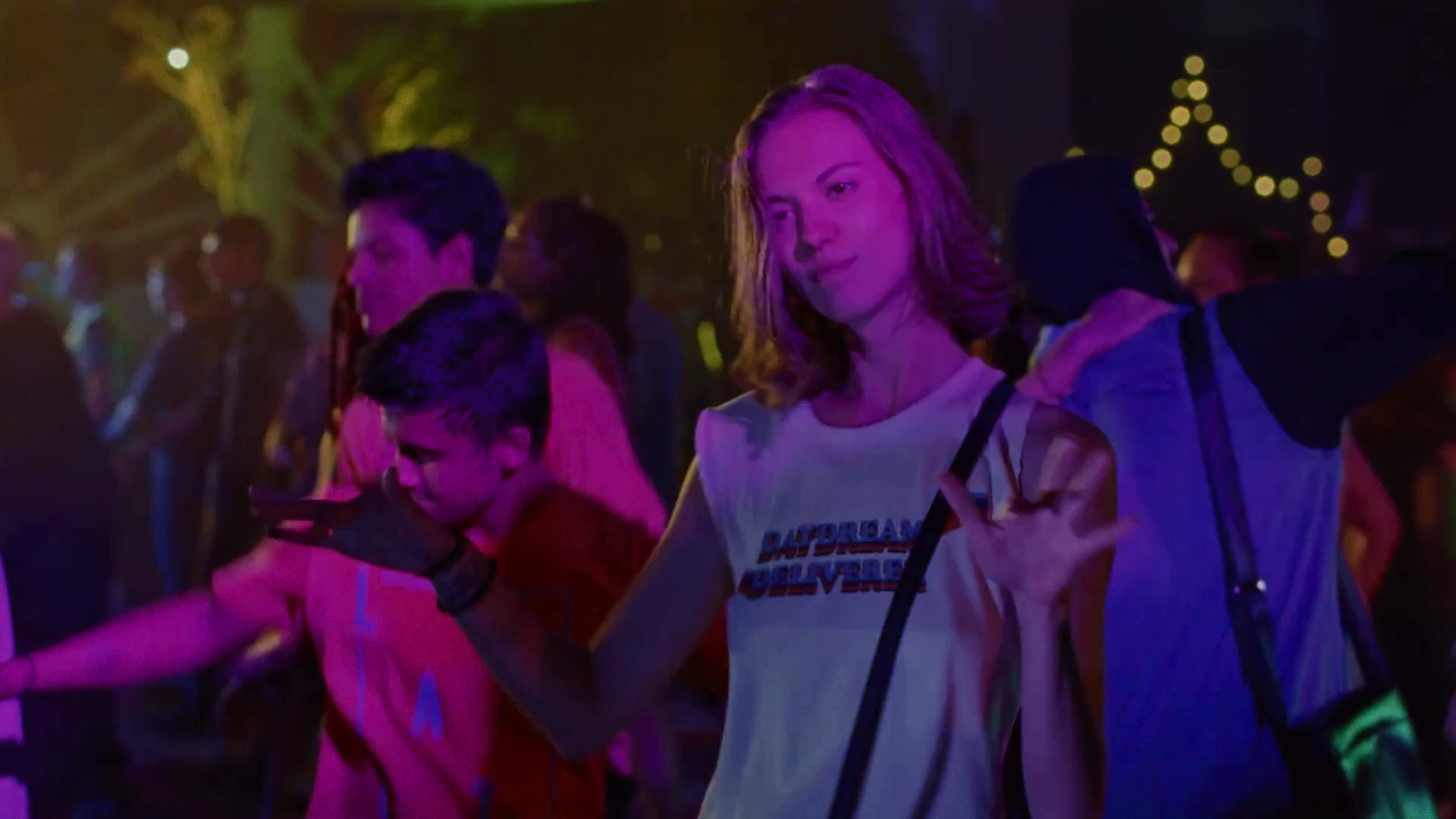
second ellipsis concerns a minor character who has no dialogue
(beyond “Hi”), and is seen in only two brief scene fragments. She
is a woman dancing in a club that Gabriel visits; in the initial
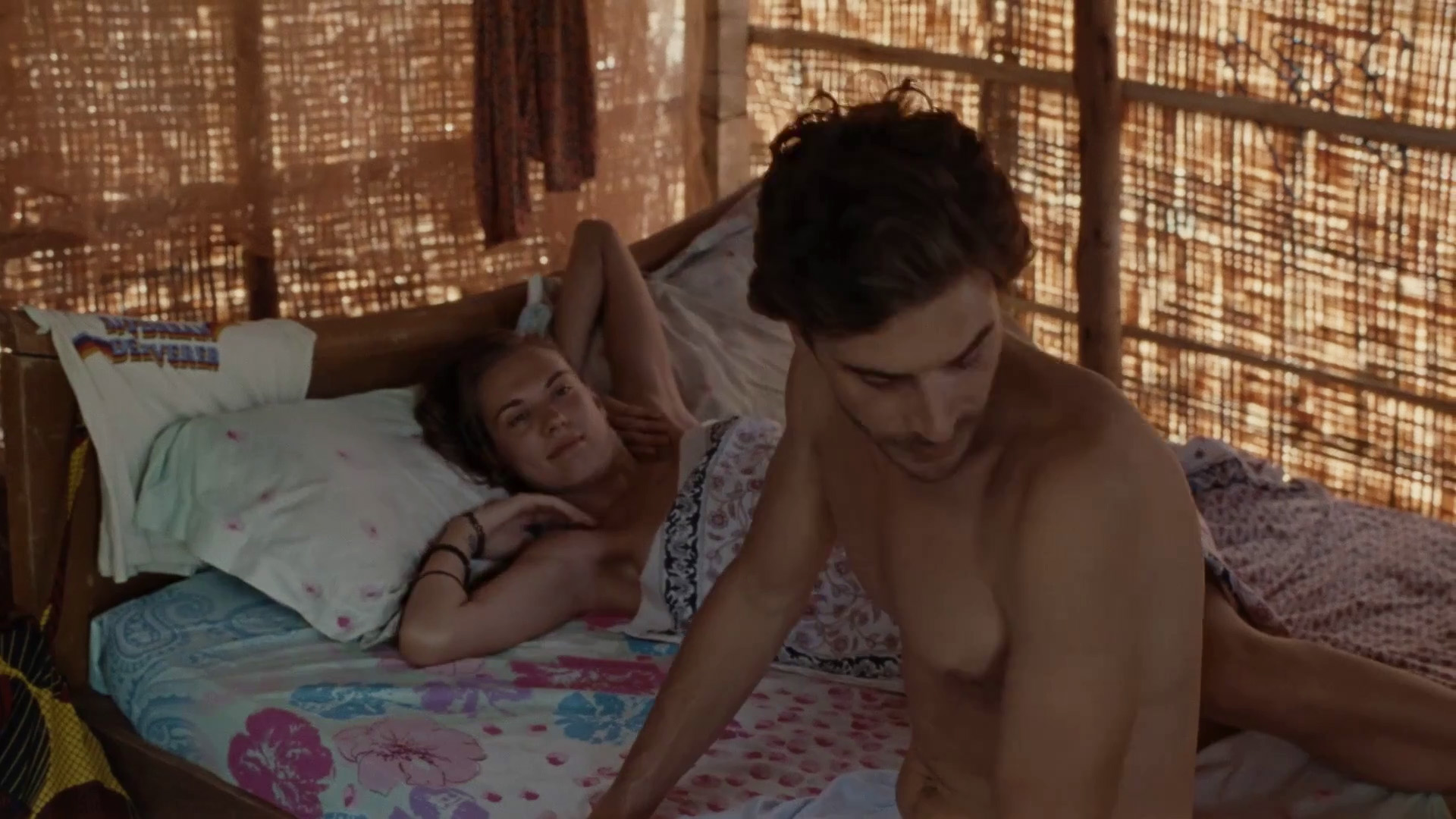
glimpse of her, she looks over, lingeringly, to him. Cut: next
morning, they are in bed together – a not uncommon condensation of
sex-scene cause and effect in contemporary cinema. As this short
‘morning after’ scene unfolds, he gets out of the bed, walks to
the doorway and looks out at the view (it’s her pad, not his), and
returns as the woman awakes and stretches; they look at each other.
She plays no further part in the plot; this is the elliptical
depiction of a typical one-night stand – perhaps an iterative scene (i.e., representative of only one of many, or at least several,
such occasions), if we presume that it’s not the first or last time
for this activity during Gabriel’s time in Goa.
The
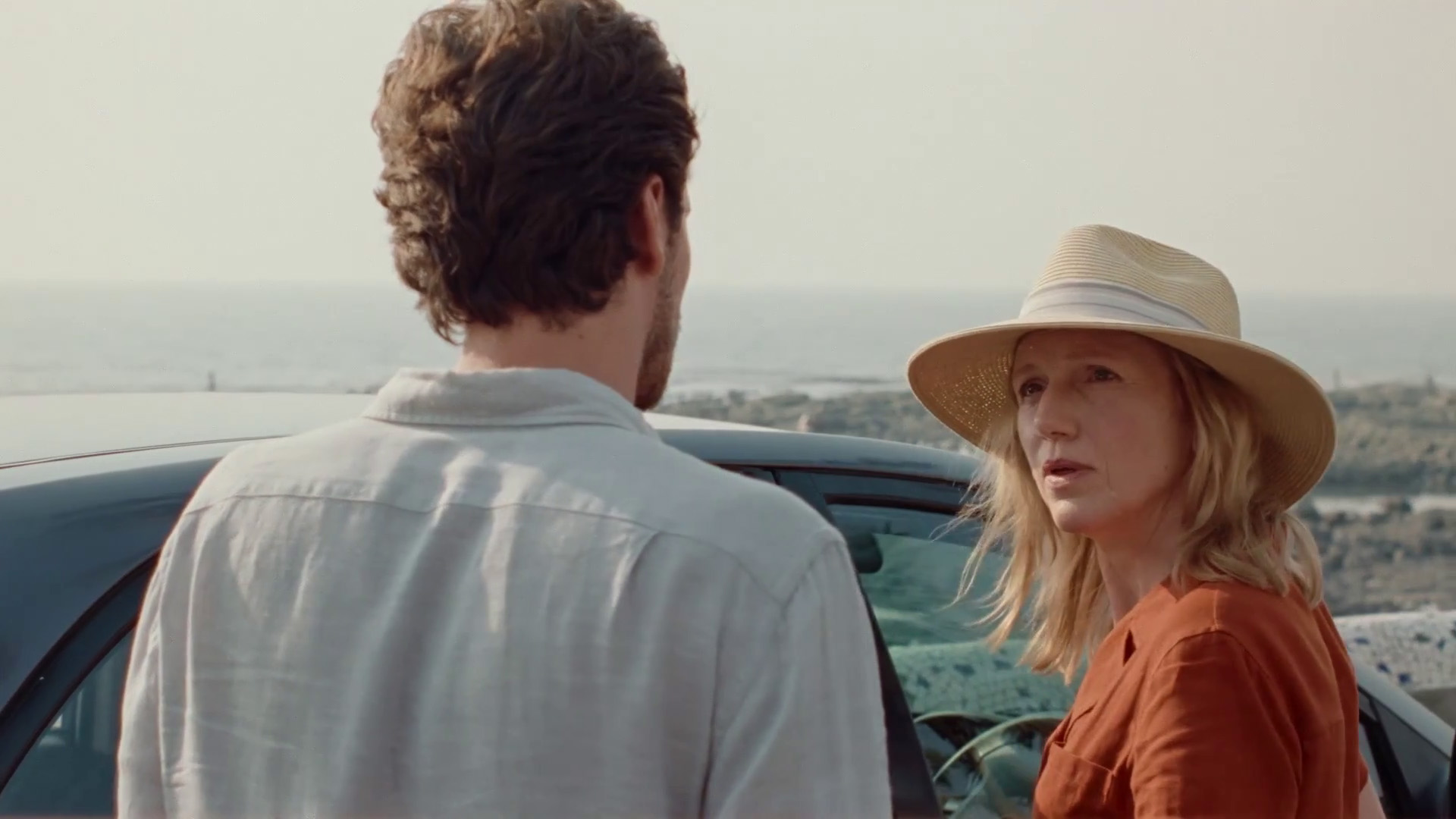
third ellipsis concerns Johanna (Johanna ter Steege from Philippe
Garrel’s 1990s films), the mother (now also living in
India) from whom Gabriel has long felt estranged. To this point of
the story, half-way through, we have mainly followed the hero in his
peregrinations. After the awkward farewell between mother and son, Maya takes – for how
long, we cannot know in advance – a crucial, bifurcating detour: we
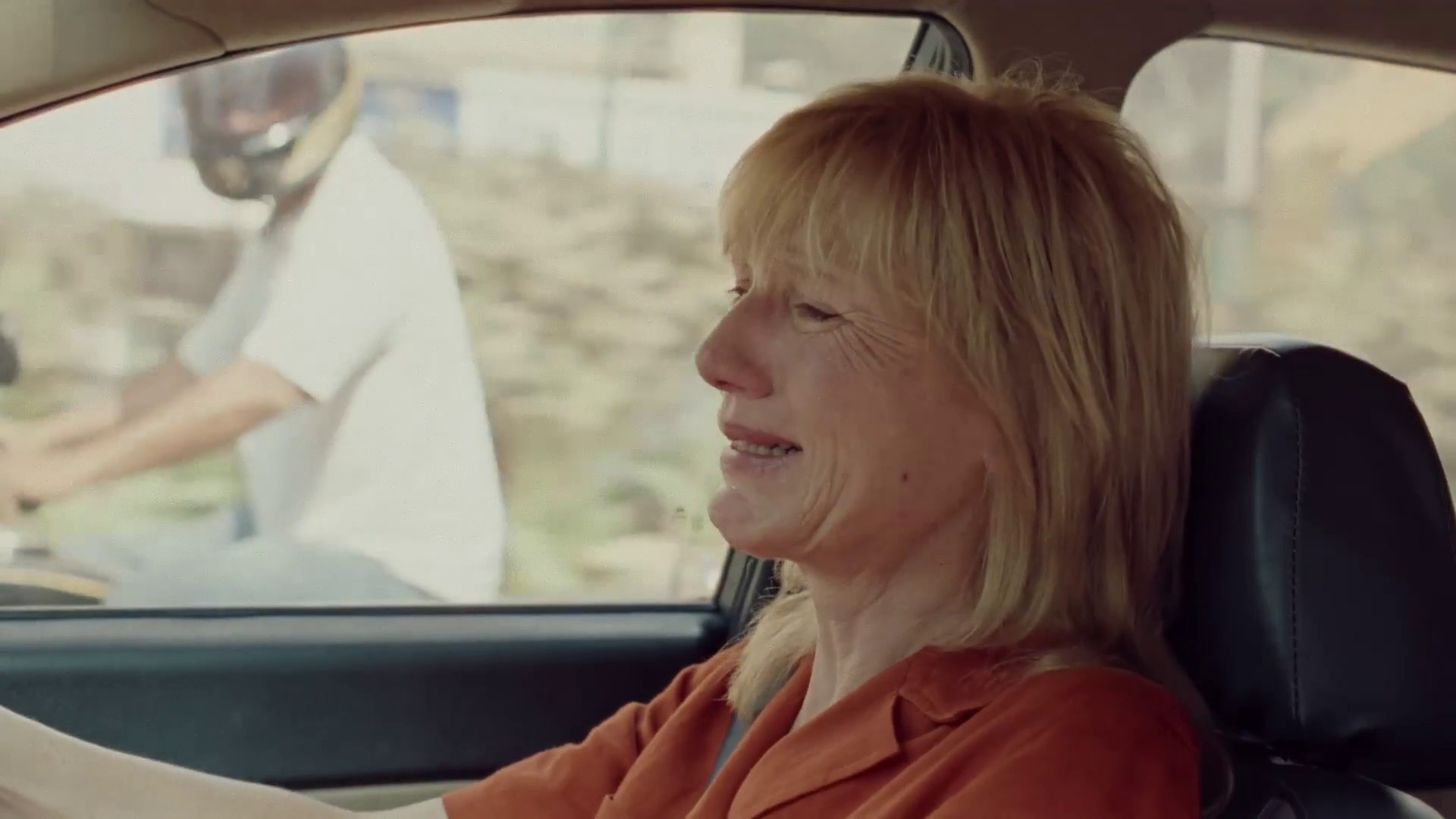
see Johanna driving, and then crying in the aftermath of this
unsuccessful reunion. And we keep following her, for (as it turns
out) one further step: standing on the street, she awaits her child’s
exit from school (we are allowed no way to pinpoint which child in
this pack is actually hers), and smiles as, off-screen, he
approaches. One may rightly query: is this even an ellipsis? Surely
it adds, rather than subtracts, an element to the film; it expands
the purview of the fiction, even if only for a few, charged moments
(while leaving behind what we took to be the central focus). Yes; but
once that window of bifurcation abruptly shuts – for it is not the
inauguration of an alternating plot structure (as we might have
imagined) – that significant new element is excluded, elided
forever more.
What, poetically, is at stake in each of these ellipsis types? Type 1: Leaps – potentially great leaps – in the time and space of the film’s narration. Hence, a form of condensed, narrative minimalism we associate with Robert Bresson and a considerable army of post-Bressonians, from Garrel to Angela Schanelec. A film using this kind of ellipsis claims its freedom to arrange the forward drive of the story (if, more or less, it sticks to a linear unfolding) just as it pleases; active narration asserts itself over narrative givens. Type 2: A certain class of scene – the plot’s store of familiar, generic, typical, even expected events – is reduced to a few, essential strokes, the bare minimum of required depiction. A particular kind of poetic, even lyrical effect is thereby created: a standard human interaction is captured in a couple of images and a reduced number of movements and gestures – maybe just a volley of exchanged looks (Garrel’s films, again, offer many examples). Type 3: A film can split off its established or assumed main path. It can give us a poignant glimpse of another character, another life, another story that haunts, in parallel and from off-screen, the central character-trajectory. Antonioni may have been the first important filmmaker to systematically explore the possibilities of this type of option; in recent years, it has become the central structuring principle of films by Schanelec (Music, 2023) and Gastón Solnicki (A Little Love Package, 2022) – works that, like Hansen–Løve, aim for a fairly constant flow of epiphany. It is, in essence, a realist principle or, at the very least, wields what Barthes called a reality-effect: it acts just like Bazin’s ‘window of the frame’ (indicating the phenomenal world everywhere beyond its four edges), but in a combined spatio-temporal and plot-inflected way: the fiction gives the impression of spreading out, that it cannot be contained within one tightly focalised stream. Hansen-Løve explores – in a varied, unsystematic way from film to film – the expressive possibilities opened up by these stylistic options. Ellipses are numerous and central in the trajectory of Goodbye First Love (2011), rendering truly timeless the constant vacillation of Camille (Lola Créton) between her hard-to-corral amour de jeunesse Sullivan (Sebastian Urzendowsky) and her older, more settled partner, Lorenz (Magne-Håvard Brekke) – an intriguing reinvention of the familiar romance-genre ‘object choice’ duality. In her debut feature All is Forgiven (2007) and its successor, The Father of My Children (2009), a teenager in the central (broken) family unit surprisingly steps forward, in both cases around mid-way, to ‘take over’ the narrative course – and, in the former, this occurs after a sudden ellipse of eleven years. It’s a signature theme of the director: the blossoming young woman who, in her boldness and independence, slightly repairs the frayed generational bonds and affective ties of the family (a family broken and recomposed, as Kate Ince discusses in her book on the director) – except that unexpected death (of the father in All is Forgiven), or refusal of the other to play ball with such detente procedures (in The Father of My Children, the previously unknown stepbrother, who is never seen) tend to get in the way of such reconciliation plans. Can, indeed, all be forgiven, even with the best of intentions? Letters and gifts (signs of a pre-Internet sensibility!) also carry a subtly disruptive function – and signal a highly sensitised emotional attunement – in her films. The final scenes of Eden (2014) – for me, her best and most completely realised work to date – are exemplary: a woman whom Paul (Félix de Givry) has met in his writing class offers him a book of Robert Creeley’s poetry in the street before dashing off; the film concludes with his lying down to read it, which is accompanied by images of the gift-giver reciting a particular, marked poem directly to camera, and its text (in two languages) appearing and disappearing in on-screen print. No romantic resolution here, only the hint of a possibility; and the fleeting opening up, as the film is vanishing from view, of a poetic, stylistic texture reaching beyond strict naturalism. All is Forgiven, likewise, ends with the spontaneous, spoken translation (from German into French) of a poem that the now deceased father had earlier posted to his daughter. Another way to frame this general inquiry into Hansen-Løve’s cinema: her films track human actions that are frequently ordinary and iterative, that often function as transitional states between other sorts of events – actions such as walking, driving, eating, reading, riding on public transport, lying down, listening to music – but also, without overdramatising (sans mélo), to bring out the expressive eloquence of these events in the flow (the ‘river’, an image-and-song concluding Goodbye First Love) of time and life. It is intriguing to gauge, in retrospect, how much of this template is embryonically present in a film in which Hansen-Løve acted as a teenager, Late August, Early September (1998) by her ex-partner Olivier Assayas, sensitively described by Kristin M. Jones as “an elegantly elliptical narrative in which quotidian moments yield nearly invisible transformations and revelations” (Olivier Assayas, p. 124) – yet without attaining the concentrated intensity, authenticity or ‘light touch’ of her own later work. ‘Understatement’ – the word appears in virtually every appreciation of her cinema – can be a difficult art to manage. I have elsewhere (in my account of Eden) described this mode of Hansen-Løve’s work as a Bressonian naturalism (shared with some films by Assayas); it also has a crucial affinity with and source in Garrel – All is Forgiven, with its echoes of J’entends plus la guitare (1991), makes that debt clear – although he exhibits a sparer, more chiselled approach to scene construction (and dressing!), with less clutter of naturalistic detail, and his films effortlessly exude an air of economic precarity on all levels (whereas Hansen-Løve is sometimes castigated, however unfairly, for the comfortable bourgeois trappings of many of her characters, especially by the time her career arrives at Bergman Island [2021] and One Fine Morning [2022]). Let’s linger for a moment on Maya and its place within the director’s career to date (early 2026, before the completion and release of If Love Should Die, a biopic of Mary Wollstonecraft). It is, for various reasons, effectively the ‘lost film’ in her trajectory; travelling scattered festivals in 2019 but not much further in time (due, most likely, to the pandemic outbreak of 2020 that curtailed most arthouse circuits) and released theatrically in Germany (one of its co-producing countries) only in 2021, it’s the least seen and discussed of her works. It’s also – I believe this can be stated as an objective fact – her least impressive effort, especially coming after the strong run of four features from All is Forgiven to Eden. (Even the polite career surveyor online for Sight and Sound nominates Maya gently as “where not to start” with her œuvre.) It marked an inflection point – nothing since has grabbed me as much as those earlier films – and also exposed the most potentially fragile aspect of her overall approach. A (quite positive) full-page review of Maya by Jean-Philippe Tessé in Cahiers du cinéma (he was the only person among the magazine’s then-regular critics to include it in his Best 10 of that year) gives a clue as to the nature of that fragility. The film, he suggests, is not about trauma or a state of psychological injury – which is surprising, given its initial, pre-narrative premise of two journalists released from long captivity in Syria. Rather:
Journeys, and encounters. Hansen-Løve’s films are full of them – indeed, constituted by them. Tessé’s text is even entitled “La rencontre”: “The film conveys this encounter in the same way it narrates the journey, because journey and encounter are mixed together and are based on each other”. Hansen-Løve dedicates herself to recording seemingly random “gestures, moments, situations that occur”, rather than spelling things out in spoken dialogue (or, for that matter, voice-over). Tessé touches upon the potential superfluity of his own critical act in this musing:
Hansen-Løve wants the eloquence of her films to emerge in a natural, unforced way – without overstatement or underlining. She wants to honour the ordinary, the undramatic, the natural passage of time (an ambience helped out by her taste for Anglo-Celtic folk music traditions). Her concentration on the ordinary, however, can tip into the banal – the ‘laying bare’ can become too extreme, fatally inexpressive. How many transitional shots of driving, boating and riding, set to music, do we really need in Maya? This is also a case in which understatement of the romantic drama – Maya’s despair and bitterness at being abruptly abandoned by Gabriel, a largely unspoken, subtle situation treated with far more intensity in Goodbye First Love – tips into irresolution just as the film is arriving at its supposedly pacific, serene ending. (The Father of My Children better handles a similar switch-up of mood at the very end.) The arbitrary, telemovie-style freeze-frames that conclude both Maya and One Fine Morning are not a good sign. Before Maya, Things to Come (2016) – the French title L’Avenir could more starkly be rendered as The Future – indicated a shift in Hansen-Løve’s career away from narrative bifurcations and digressions, and toward a more conventional focalisation upon a single, central character (albeit surrounded by an ever-changing swarm of others): in this case, philosophy teacher Nathalie (Isabelle Huppert). Stylistically, in both its first and last shots, that reorientation is signalled: unusually for Hansen-Løve, the camera ‘unmotivatedly’ moves into and away from its star. It boasts some fine scenes and an excellent (somewhat eccentric and detached) performance from its star, but it reveals a growing uncertainty, on the director’s part, in the understatement stakes. Dramatic metaphors, ‘objective correlatives’ that signal and unambiguously embed the main themes of the piece begin to intrude – disturbing what Emma Wilson admired in 2012, the way in which “symbolism does not disrupt the sure, smooth, realist surface”. From the sole symbol of a once-gifted hat (tellingly, rendered in uncharacteristic slow motion) that the wind takes away from the protagonist in Goodbye First Love, we pass to an entire ledger, 5 years later, of such overstressed devices and counterpoints, such as the fugitive cat Pandora (Nathalie gets it reluctantly, comes to love it, finally gives it away …). Gaspard Nectoux commented in Cahiers du cinéma:
Explication de texte: a cruel reference by Nectoux to the type of old-school, strait-jacketed, laying-down-the-interpretive-law pedagogy that Nathalie presumably surpasses in her own open philosophical discussions with teenagers! Indeed, the entire narrative superstructure of Things to Come – a tissue of ‘political’ events including a student strike, employment/retirement laws, the mercantile policies of commercial-highbrow-pedagogical publishing, and a jolly (part German and Italian) editorial collective debating authorship and planning a revolutionary publishing program amidst an agrarian refuge-paradise – never takes root in the intimate drama of Nathalie’s unfolding life. (In Maya, at least, the initial political pretext is more cleanly dispensed with.) Where the film ultimately lands – with Nathalie as a happy grandmother nursing a new-born baby (so starkly different to the corresponding hospital scenes of Huppert in the contemporaneous Elle [2016]!) – seems, alarmingly, just a bit too normal and conventional (dare we say ‘bourgeois’?) as a send-off. It’s the first serious disappointment of Hansen-Løve’s later career. Ince suggests that candour is a key to the form and sensibility of Hansen-Løve’s cinema, since it contains connotations of “artlessness and ingenuousness as well as directness and frankness” (p. 105). Aesthetically, that is surely a knife’s edge, and it just as surely has as much to do with the hard-to-pin-down perception and sensibility of the viewer: John Boorman, after all, found (in a Venice Film Festival jury role) J’entends plus la guitare to be “naturalistic, almost without style” (he’d clearly never before encountered the cinema of Garrel!) but, at the same time, “intense … it stayed with me longer than most” (p. 99). Hansen-Løve’s
films teeter on that same edge: effervescent – and, to a certain
extent, not exactly material – are those epiphanic moments some of
us experience as the “primal functions of cinema” (Tessé), in
which “a state of mind allows a way of
inhabiting the world” (Álvarez): a pure flash of emotion, a
mood captured, a sensation conveyed. From All
is Forgiven to Eden,
this vision holds true. It is the challenge for any filmmaker who
foregoes more expressionistic registers of stylisation to place their
faith and trust in what has often been called the sheer evidence of bodies, gestures and situations on screen. Can Hansen-Løve manage
to get back to the point of equilibrium she reached 12 years ago, and
develop it differently from there? REFERENCES Cristina Álvarez López & Adrian Martin, “Cine-Letters, Rotterdam 2012”, LOLA, no. 2 (June 2012). John Boorman, “Bright Dreams, Hard Knocks: A Journal for 1991”, Projections, no. 1 (Faber and Faber, 1992), pp. 4-120 Kate Ince, The Cinema of Mia Hansen-Løve: Candour and Vulnerability (Edinburgh University Press, 2021) Kristin M. Jones, “The Soul in Times of Danger”, in Kent Jones (ed.), Olivier Assayas (Filmmuseum Synema Publikationen, 2012), pp. 124-129 Gaspard Nectoux, “L’âge des possibles”, Cahiers du cinéma, no. 721 (April 2016), p. 54 Jean-Philippe Tessé, “La rencontre”, Cahiers du cinéma, no. 750 (December 2018), p. 53 Emma Wilson, “Precarious lives: On Girls in Mia Hansen-Løve and Others’, Studies in French Cinema , Vol. 12 No. 3 (2012), pp. 273–284
© Adrian Martin January-February 2026 |